
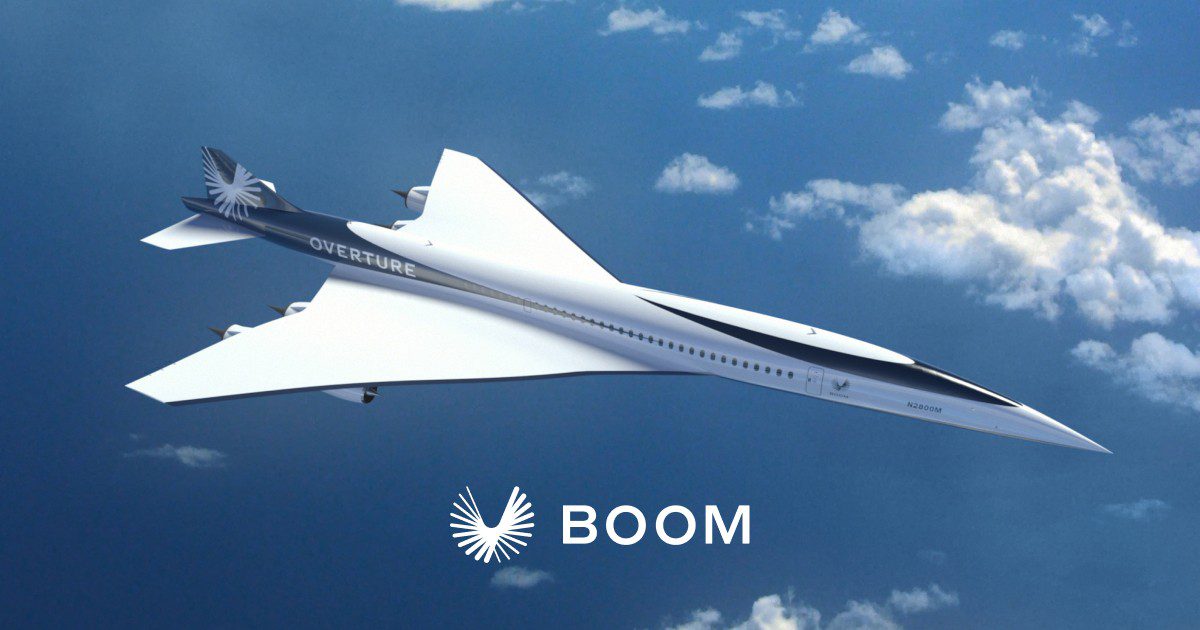
Updated October 2026. Boom Supersonic is developing a proposed passenger airliner called Overture. Its XB-1 aircraft is a technology demonstrator, not a 55-passenger scheduled airliner. Keeping those two projects distinct makes it easier to understand what has been demonstrated and what remains a development target.
What XB-1 achieved
Boom announced XB-1’s first supersonic flight on January 28, 2025. Its milestone announcement describes the demonstrator flight and its role in developing technology for Overture. A successful test is meaningful, but does not by itself certify a different aircraft to carry paying passengers.
What Overture is intended to do
Boom’s current Overture overview describes a planned Mach 1.7 airliner with 64–80 passengers and proposed journey-time savings on suitable routes. Those specifications and fares are company targets. They should not be presented as the measured performance or ticket prices of an airliner already in regular service.
Actual travel time also includes the portions of a journey flown at different speeds, routing, airport time and other operational constraints. A faster cruise speed does not halve every passenger’s entire door-to-door trip.
Speed does not prove environmental superiority
The earlier version of this article claimed that supersonic travel is inherently more fuel efficient and produces fewer emissions than conventional air travel. That conclusion was unsupported. Performance and environmental comparisons need actual aircraft, payload and operating assumptions. SAF compatibility alone does not establish zero emissions or guarantee the fuel supply an operator would need.
What to watch next
Engine development, aircraft testing, certification, production and airline entry into service are distinct milestones. Noise requirements, infrastructure and operating economics also affect whether and where a proposed service is practical.
For enthusiasts, the useful approach is to follow verified events and label projections clearly. XB-1’s test program can be discussed as an achievement while Overture’s commercial promise is evaluated against the approvals and operations still needed.