
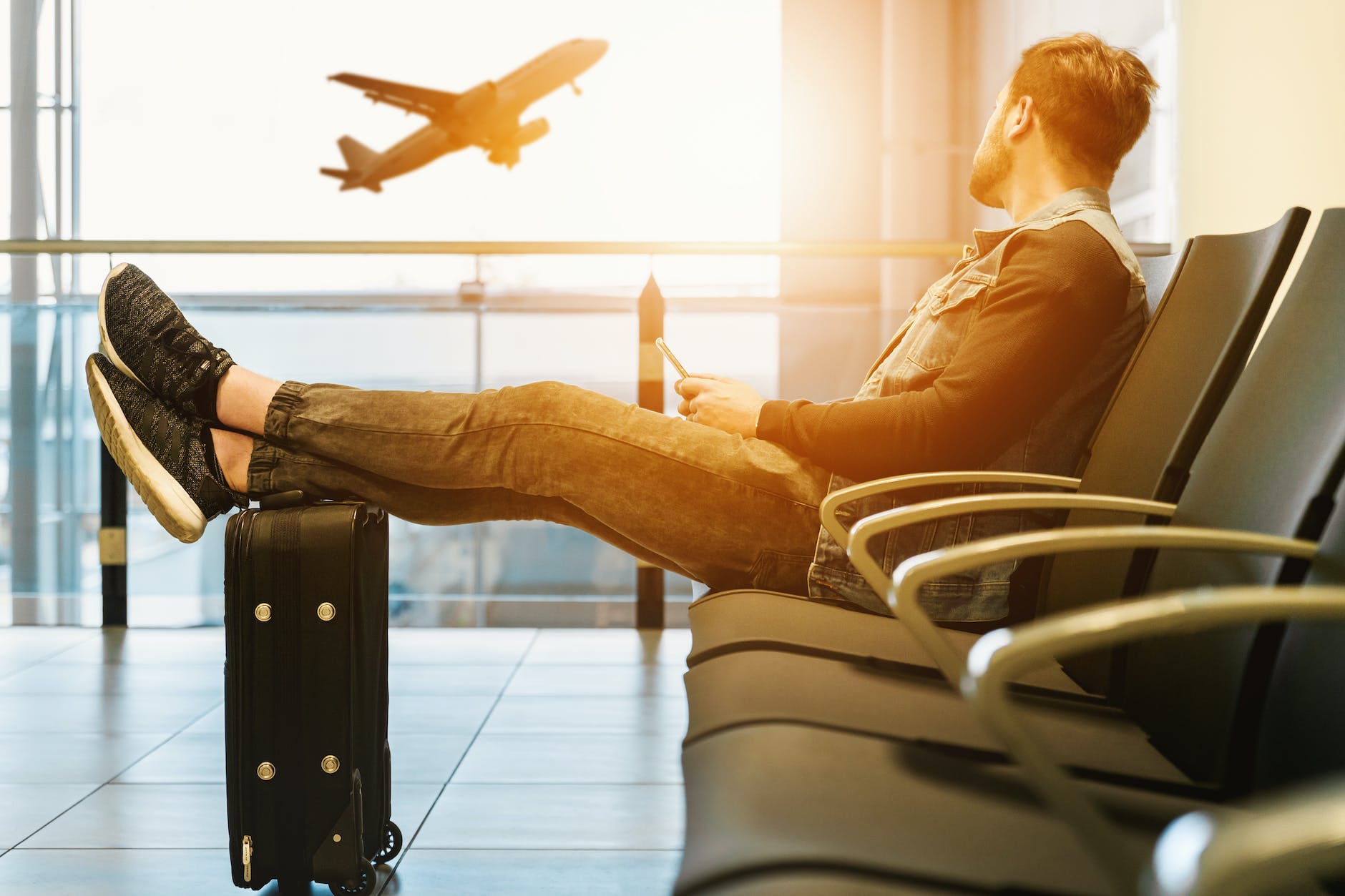
Travel can interrupt your usual drinking routine: an early departure, security queue or missed meal may leave you less comfortable than expected. Plan access to water without assuming that one fixed amount is right for every traveler.
Make drinking convenient
Carry an empty reusable bottle where permitted and fill it after screening. Keep it accessible during the flight, or ask for a drink when service is available. On a long journey, think about the terminal and ground-transfer stages as well as time in the air.
Drink in a way that fits your normal needs and any medical advice you already follow. Travelers with a prescribed fluid restriction should follow their clinician’s guidance rather than a generic online water target.
Separate comfort from medical claims
A moisturizer or face mist may change how dry skin feels; it is not a substitute for drinking fluids. Clothing choices and avoiding spicy food should not be presented as proven methods of preventing dehydration.
Water should not be promoted as a guaranteed way to prevent travel-related blood clots. The CDC’s travel and clot guidance says there is no direct evidence that hydration prevents travel-associated venous thromboembolism.
Movement and individual risk
Move when the crew permits and when it is safe to do so. If you have a history of blood clots or another relevant condition, discuss travel precautions with a clinician before the trip; do not choose medication or compression treatment from a general blog checklist.
Keep the plan simple
Have a drink available, eat as appropriate for your journey and protect your sleep. Persistent or severe symptoms deserve medical attention rather than repeated attempts to fix them with a travel drink.