Posted on

Fueling the fire: “Aviation Runs in Their Blood” – The Most Important thing for Passionate Aviators – 4 key factors

jet cloud landing aircraft

For many aviation runs in their blood, from pilots, plane spotters, mechanics, gate agents, FBO workers, ramp workers and more.

Aviation is not just a job or a hobby for some, it runs in their blood. For these individuals, the world of flight is a passion that cannot be denied. From the roar of the engines to the feeling of soaring through the skies, aviation is a way of life.

Childhood

For those with aviation in their blood, the love of flight begins at a young age. For these passionate aviators, the thrill of soaring through the skies is something that has always been a part of them. From childhood, they have been captivated by the sight of airplanes in the sky and the freedom that comes with flying. For these individuals, aviation is more than just a hobby or a career, it’s a way of life. They are driven by the desire to explore the world from above, to experience the beauty of the earth from a unique perspective and to push the limits of human flight. The passion for aviation runs deep in their veins, and it is something that will stay with them for a lifetime.

Passion

For some, the passion for aviation leads to a career in the industry. These individuals have a deep understanding and love for the intricacies of flight, and the desire to make a career out of it. They may become pilots, air traffic controllers, engineers, mechanics or any other of the many professions that make up the aviation industry. They have dedicated their lives to the pursuit of flight, always striving to learn more and improve their skills. The aviation industry offers a wide range of opportunities, from flying commercial jets to working on cutting-edge research projects. For these individuals, a career in aviation is not just a job, it’s a calling. They are driven by the desire to make a difference in the world, to push the boundaries of what’s possible and to be a part of something bigger than themselves.

Hobby

For others, aviation is a hobby and a way to escape the day-to-day grind. They spend their free time flying model airplanes, building replicas of their favorite aircraft, or even flying real planes as a hobby pilot. They attend airshows, plane spotting events, and other aviation-related gatherings, always eager to be around the aircraft and the people who love them.

For those with aviation in their blood, the love of flight extends beyond the practical aspects of flying. The history and technology of aviation also hold a deep interest. They study the early pioneers of flight, the development of the first airplanes, and the advancements in technology that have led to modern air travel. They are fascinated by the engineering and design of aircraft, and the aerodynamics that make flight possible.

Way of life

For some, aviation is not only a passion but also a way of life truly aviation runs in their blood. They have aviation-themed decor in their homes, wear aviation-themed clothing, and even name their children after famous airplanes or pilots. They are always looking for ways to incorporate their love of flight into every aspect of their lives.

Aviation is more than just a job or a hobby for those with it in their blood. It is a passion that cannot be denied. The love of flight is something that runs deep, and it is a part of who they are. For these individuals, the world of aviation is not something that can be turned off or put away, it is a way of life.

Conclusion: When aviation runs in their blood

In conclusion, having aviation runs in their blood and heart is a special thing. It is a passion that cannot be denied and it becomes a way of life. It is not just about flying, but it’s the love of the history, technology and the adrenaline rush that comes with flying. It’s something that those who have it in their blood will always cherish and continue to fuel their passion for aviation.

Posted on

Fly High in Style: Top 10 Aviation Related Clothing Picks for the Whole Family

photo of an aircraft

Aviation enthusiasts have long been drawn to the world of flight, and one way many express their passion is through aviation related clothing and items. Among the most popular items in this category are aviation t-shirts. These shirts come in a wide variety of designs, from vintage-inspired looks to modern and sleek styles. Whether you’re a pilot, a plane spotter, or simply someone who loves the thrill of flying, there’s a t-shirt out there for you.

Logos and Liveries

One of the most popular types of aviation t-shirts feature the logos and liveries of airlines. These shirts often feature the recognizable logos and color schemes of major airlines such as Delta, American, or United. Aviation related clothing can also feature the logos of smaller, regional airlines or even aircraft manufacturers such as Boeing or Airbus. These shirts are a great way for aviation enthusiasts to show their support for their favorite airline or aircraft.

Vintage or Retro

Another popular type of aviation t-shirt features vintage or retro designs. These shirts often feature classic aircraft from the early days of flight, such as the Douglas DC-3 or the Lockheed Constellation. They may also feature vintage airline logos or advertisements. These shirts are perfect for those who are interested in the history of aviation and want to pay homage to the early pioneers of flight.

Commercial to Military

Many aviation t-shirts also feature images of aircraft themselves. These shirts can feature anything from commercial airliners to military fighter jets, and can be a great way for enthusiasts to show off their favorite aircraft. These shirts can also feature images of popular airshows, such as the Blue Angels or the Thunderbirds. They are a great way to show off your love of aviation and the thrill of flight.

Quotes and Slogans

There are also aviation-themed t-shirts that feature quotes, slogans and mottos that are related to the world of flying. These shirts can feature famous quotes from pilots, aviation proverbs, and even aviation jokes. They are a great way to express one’s passion for aviation in a humorous way.

Family

In addition, there are also aviation-themed t-shirts and other aviation related clothing designed for women, children and babies. These shirts come in a wide variety of designs, and can be a great way for the whole family to show their love of aviation.

Conclusion

In conclusion, aviation t-shirts are a great way for aviation enthusiasts to show off their passion for flight. Whether you’re a pilot, a plane spotter, or simply someone who loves the thrill of flying, there’s a t-shirt out there for you. With so many different designs to choose from, there’s sure to be a shirt that’s perfect for you. So, next time you’re looking for a new aviation-themed shirt, remember to check out the wide variety of options available.

Posted on

Truly, I’d rather be flying – Wouldn’t you?

Flying Etiquette, I'd rather be flying

“I’d rather be flying” is a popular phrase that expresses the passion and joy of flying for many pilots, aviation enthusiasts, and anyone who has experienced the thrill of being in the air. In this blog post, we will explore the meaning of the phrase, the reasons why many people feel this way, and the different ways in which flying can be experienced.


Becoming a pilot

For pilots, the phrase “I’d rather be flying” expresses the love of flying and the freedom that it brings. Pilots spend countless hours training and studying to become proficient in the skills necessary to fly an aircraft. They also spend a significant amount of time preparing for flights, completing checklists, and monitoring weather conditions. But all of this effort is worth it when they’re in the air, soaring above the clouds and experiencing the unparalleled freedom of flight.


Aviation enthusiasts

For aviation enthusiasts, the phrase “I’d rather be flying” expresses the thrill and excitement of experiencing flight. Many aviation enthusiasts take flights as a hobby, whether it be flying in small single-engine aircraft or taking a ride in a commercial airliner. They also spend a lot of time at airports, watching planes take off and land, and talking with pilots and other aviation enthusiasts. The excitement of watching a plane take off or experiencing the sensation of flying is something that many aviation enthusiasts find hard to match.


The joy of flying

For those who have had the opportunity to fly, the phrase “I’d rather be flying” expresses the joy and wonder of being in the air. Whether you’re a seasoned pilot or a first-time passenger, the feeling of being in an aircraft and looking down at the world below is an experience that can’t be matched. From the beautiful views of the landscape to the sensation of weightlessness and the feeling of freedom, flying is an experience that can be truly life-changing.


Stressful world

For many people, the phrase “I’d rather be flying” represents a desire to escape the everyday stresses of life and experience something truly extraordinary. The world can be a stressful and overwhelming place, and the freedom and tranquility of flying can be a welcome escape. The sensation of flying can be a form of therapy, providing a sense of peace and tranquility that can be hard to find on the ground.

Dream

For some, the dream of flying is still just that, a dream. But for those who have the opportunity to experience flight, the phrase “I’d rather be flying” is a reminder of the joy and wonder that flying can bring. From solo flight lessons to sightseeing tours, there are many ways to experience the thrill of flight. Whether you’re a pilot, an aviation enthusiast, or someone who has always dreamed of flying, there is no denying the passion and joy that flying brings.

Conclusion

In conclusion, the phrase “I’d rather be flying” expresses the passion and joy that many pilots and aviation enthusiasts feel about flying. It represents the freedom, thrill, and wonder of being in the air. Whether you’re a seasoned pilot or a first-time passenger, flying is an experience that can be truly life-changing and it’s definitely worth the effort and time to experience the beauty and freedom of flying. Flying is not just a mode of transportation but an adventure and a passion for many, and the phrase “I’d rather be flying” encapsulates that spirit of adventure and passion.


Posted on

What is the ICAO Phonetic Alphabet?

crop blue eyed man with painted letters on face

The International Civil Aviation Organization (ICAO) phonetic alphabet is a standardized system of words used to represent letters and numbers in radio communications. This system is used by pilots, air traffic controllers, and other aviation professionals around the world to ensure clear and accurate communication in the air.

The ICAO phonetic alphabet

is composed of 26 words, each of which corresponds to a letter of the English alphabet. The words are chosen for their distinctiveness and ease of pronunciation, and are designed to be easily understood even in noisy or stressful situations. The words are as follows:

A – Alpha

B – Bravo

C – Charlie

D – Delta

E – Echo

F – Foxtrot

G – Golf

H – Hotel

I – India

J – Juliet

K – Kilo

L – Lima

M – Mike

N – November

O – Oscar

P – Papa

Q – Quebec

R – Romeo

S – Sierra

T – Tango

U – Uniform

V – Victor

W – Whiskey

X – X-ray

Y – Yankee

Z – Zulu

In addition to letters, the ICAO phonetic alphabet is also used to represent numbers. The words used to represent numbers are as follows:

0 – Zero

1 – One

2 – Two

3 – Three

4 – Four

5 – Five

6 – Six

7 – Seven

8 – Eight

9 – Nine

The ICAO phonetic alphabet is used in a variety of situations in the aviation industry. For example, pilots may use the phonetic alphabet to spell out the letters of their aircraft registration or the name of a destination airport. Air traffic controllers may use the phonetic alphabet to clarify the identity of an aircraft or to provide instructions to pilots.

One of the key benefits of the ICAO phonetic alphabet is that it helps to reduce confusion and misunderstandings in radio communications. By using standardized words to represent letters and numbers, pilots and air traffic controllers can be sure that their messages will be understood correctly. This is especially important in situations where there may be background noise or other distractions, such as during a flight in bad weather or at a busy airport.

Another benefit of the ICAO phonetic alphabet is that it is widely used around the world. This means that pilots and air traffic controllers from different countries can communicate with each other using the same system, which helps to ensure that there are no misunderstandings due to different languages or dialects.

In conclusion, the ICAO phonetic alphabet is a standardized system of words used to represent letters and numbers in radio communications. It is widely used in the aviation industry to ensure clear and accurate communication between pilots, air traffic controllers, and other professionals. The use of standardized words helps to reduce confusion and misunderstandings, and the system is used worldwide, which helps to ensure clear communication among aviation professionals from different countries.

Posted on

Politics and Flying: What makes these 2 odd topics connect?

Politics and Flying

Politics and Flying

Politics and flying are two seemingly unrelated topics, but they are more intertwined than one might think. The aviation industry is heavily regulated by government agencies, and political decisions can have a significant impact on the industry as a whole. In this blog post, we will explore the various ways in which politics and flying are connected, and how recent political developments have affected the aviation industry.

Above images credit @dadikaram

Regulation

First, let’s talk about regulation. The Federal Aviation Administration (FAA) is the government agency responsible for regulating the aviation industry in the United States. They set safety standards for aircraft, pilots, and airports, and they also oversee the air traffic control system. The FAA is also responsible for enforcing regulations, such as those related to aircraft maintenance and pilot qualifications. Political decisions, such as budget cuts, can have a major impact on the FAA’s ability to effectively regulate the industry.

Taxes and Fees

Another way in which politics and flying are connected is through taxes and fees. The government imposes a variety of taxes and fees on the aviation industry, including fuel taxes, airport taxes, and passenger taxes. These taxes and fees can have a significant impact on the cost of flying, and they can also affect the competitiveness of different airlines. Political decisions, such as changes to tax laws, can have a major impact on the cost of flying and the financial health of the industry.

Trade Policies

Trade policies are also an important aspect of politics that affects the aviation industry. Airlines depend on international trade agreements to access new markets and grow their business. Political decisions, such as the withdrawal of the United States from the Open Skies agreement, can have a significant impact on the industry by restricting access to new markets and increasing competition.

Environmental

Political decisions can also have a major impact on the environment. The aviation industry is one of the largest contributors to carbon emissions, and political decisions, such as the implementation of carbon taxes, can have a significant impact on the industry’s ability to operate.

Covid-19 Pandemic

Recent political developments have also had a significant impact on the aviation industry. The COVID-19 pandemic has led to a significant drop in air travel, and government-mandated travel restrictions have made it difficult for airlines to operate. This has led to widespread financial losses for airlines, and many have been forced to reduce their operations and lay off employees. The stimulus package passed by the government provided some relief to the industry, but it is unclear how long it will take for the industry to recover.


Conclusion

In conclusion, politics and flying are more connected than one might think. Political decisions can have a significant impact on the aviation industry, from regulation and taxes, to trade policies and the environment. The recent COVID-19 pandemic has also had a major impact on the industry, and it remains to be seen how the industry will recover in the long-term. It is important for individuals and industry stakeholders to stay informed about political developments and how they may affect the aviation industry.

Posted on

Why you should NEVER remove your shoes on a flight, 6 daunting reasons, if you needed that many.

silhouette of airplane under cloudy sky

When it comes to flying, there are a few things that are just common sense one of them is why you should NEVER remove your shoes on a flight. While it may seem like a comfortable and harmless thing to do, there are actually several reasons why it’s not a good idea. Surprisingly, there are people out there that feel this is OK. We aren’t one of them.


Here are a few reasons why you should NEVER remove your shoes

  1. Sanitation: The floors of airplanes are not the cleanest places in the world. They are often covered in dirt, grime, and even bacteria from all the passengers who have walked on them. Removing your shoes exposes your feet to all of these germs, increasing your risk of getting sick.
  2. Comfort: Taking off your shoes may seem like a comfortable thing to do, but it can actually make your feet swollen and uncomfortable. The lack of circulation in your feet caused by being seated for long periods can cause your feet to swell, making it difficult to put your shoes back on.
  3. Safety: In the event of an emergency, you need to be able to move quickly and safely. If you have removed your shoes, it will take you longer to get out of your seat and into the aisle, putting yourself and others at risk.
  4. Respect: Taking off your shoes on a flight is considered rude and disrespectful to your fellow passengers. The smell of your shoes can be unpleasant, and it’s not fair to subject others to it.
  5. Hygiene: If your shoes are dirty or smell bad, it’s not appropriate to take them off on a flight. Not only is it disrespectful to others, but it’s also unsanitary.
  6. Flight attendant’s job: Some passengers might remove their shoes and put them on the tray table, seat or even in the overhead bin, which can cause inconvenience to the flight attendants and make their job more difficult.

Is it the flight attendants job

According to standard safety procedures, flight attendants are responsible for ensuring that all passengers are properly seated with their seat belts fastened before takeoff and landing. This includes ensuring that all passengers are wearing shoes, as bare feet can increase the risk of injury in the event of an emergency. During the flight, flight attendants may remind passengers to keep their shoes on for safety reasons. As if, that should be a required job duty! Flight attendants have enough to do then babysit those that want to remove their shoes showing their bare feet.

Culturally appropriate to remove shoes indoors

In some cultures, it is considered impolite or disrespectful to wear shoes indoors, and it is common to remove shoes before entering a home or other private space. However, an airplane is not considered a private space and it is not culturally appropriate to remove your shoes on an airplane. On airplanes, it is considered a safety precaution and good hygiene to keep your shoes on. If you are unsure about cultural norms, it is best to err on the side of caution and keep your shoes on while flying.


Conclusion

In conclusion, keeping your shoes on during a flight is not only a matter of common sense but also a matter of respect, hygiene, and safety. The next time you fly, think twice before kicking off your shoes. If you want to ensure maximum comfort on your flight, consider wearing shoes that are easy to slip on and off, such as loafers or sandals. But, lets just NEVER remove your shoes on a flight… NEVER!

Posted on

New TSA Security at the patriotic Ronald Reagan Washington National Airport, with 15 security lanes!

Image credit @dadikaram https://www.instagram.com/dadikaram/

The Ronald Reagan Washington National Airport (DCA) recently underwent a major renovation of its TSA security area, aimed at improving the overall passenger experience while maintaining a high level of security.

Above images credit @dadikaram


History of the DCA Airport

The Ronald Reagan Washington National Airport (DCA) is an airport located in Arlington, Virginia, just south of Washington, D.C. It is the closest airport to the city and is primarily used for domestic flights. The airport was first established in 1941 as Washington National Airport and was renamed in 1998 to honor former President Ronald Reagan.

It is the oldest airport in the Washington D.C. area and has undergone several renovations and expansions throughout its history, including the construction of a new terminal in 1997. The airport is currently operated by the Metropolitan Washington Airports Authority (MWAA).

Architecture Inspirations

The architecture of the terminal at Ronald Reagan Washington National Airport (DCA) was designed to reflect the historical and cultural context of the Washington D.C. area. The main terminal building, which was opened in 1997, was designed to resemble the nearby monuments and government buildings in the city. The terminal’s design is characterized by its grand public spaces, high ceilings, marble floors, and numerous skylights that flood the terminal with natural light.

The terminal also features a number of decorative elements which were inspired by the art and architecture of the nation’s capital. The goal of the design was to create a sense of civic pride and to reflect the importance of the airport as a gateway to the nation’s capital.

Before the construction

Prior to the new construction each terminal had its own security checkpoint. While this was nice for allowing non ticked passengers access to the national hall when either greeting loved ones or watching them depart. It was not at all convenient for connecting passengers. Passengers would have to choose to go through security again or wait for a bus to take them between terminals. The new change makes connections much easier.


Security Lanes

One of the most notable changes is the addition of several new security lanes, increasing the total number to 15. These new lanes feature state-of-the-art technology, including X-ray machines that can scan larger items, such as carry-on luggage and personal electronic devices, more efficiently.

Procedures at Ronald Reagan Washington National Airport

In addition to the new lanes, the TSA has also implemented a number of new procedures aimed at streamlining the security process. Passengers are now able to leave liquids, gels, and aerosols in their carry-on bags, as well as keep on their shoes, belts, and light jackets. This will help speed up the security process and make it more convenient for passengers.


TSA PreCheck

Another major change is the implementation of TSA PreCheck, a program that allows eligible passengers to go through a more expedited security process. Passengers who have been approved for TSA PreCheck can leave on their shoes, belts, and light jackets, as well as keep their laptops and liquids in their carry-on bags. This will help reduce wait times at Ronald Reagan Washington National Airport and make the security process more convenient for those who are eligible.

The TSA has also made significant improvements to the overall design and layout of the security area, making it more spacious and comfortable for passengers. The area now features more seating, charging stations, and restrooms, as well as improved lighting and wayfinding signage to help passengers navigate the area more easily.

Overall

Overall, the new TSA security area at Ronald Reagan Washington National Airport (DCA) is a major improvement over the previous layout, providing a more efficient and convenient experience for passengers while maintaining a high level of security. The renovations are part of the airport’s ongoing efforts to modernize and enhance the passenger experience. The airport is continuously working on new ways to improve the passenger experience and make traveling easier and more enjoyable.

It is important to keep in mind that despite the new changes and advancements in technology, it is still the responsibility of each passenger to arrive at the airport with enough time to navigate the security process, and be prepared with all necessary documents and items. It is also important to be familiar with TSA’s rules and guidelines for what items are allowed in carry-on and checked bags to avoid any issues or delays.


Posted on

Joining the Mile High Club can be a mistake is it worth it, at least 1 time?

scenic view of sea against sky during sunset

The mile high club is a term that refers to people who have engaged in sexual activity while on board an aircraft at an altitude of at least 5,280 feet (one mile) above sea level. The term was coined in the early 20th century, around the same time that commercial air travel was becoming more popular. Since then, the idea of joining the mile high club has become something of a cultural phenomenon, with many people eager to add this experience to their list of sexual conquests.

Joining the Mile High Club isn’t for everyone

While the idea of joining the mile high club may seem exciting and adventurous to some, it is important to remember that engaging in sexual activity on an aircraft is illegal and can result in serious consequences. In the United States, for example, the Federal Aviation Administration (FAA) prohibits “acts of lewd, indecent, or obscene conduct” on board aircraft, and violators can face fines and even imprisonment. Many other countries have similar laws and penalties in place.

In addition to the legal risks, engaging in sexual activity on an aircraft can also be dangerous. Aircraft are cramped and crowded spaces, and it can be difficult to find a private place to engage in sexual activity. Furthermore, the cabin pressure and lack of oxygen at high altitudes can cause dizziness and disorientation, which can make it difficult to engage in sexual activity safely.

Despite the risks and legal consequences, many people are still drawn to the idea of joining the mile high club. Some people see it as a way to add excitement and adventure to their sex lives, while others may be motivated by a sense of rebellion or a desire to break the rules.

One way to join the mile high club without breaking the law is by booking a private jet or a charter flight. These flights can provide a more private and comfortable environment for sexual activity, and the rules and penalties for engaging in sexual activity on these flights may be different than on commercial flights. However, it’s still important to be aware of and adhere to any laws or regulations regarding sexual activity on private jets or charter flights.

Another way to join the mile high club is by engaging in sexual activity with a partner in your dreams or by using virtual reality technology. These methods are safe, legal and don’t come with any risks or consequences.

In conclusion, while the idea of joining the mile high club may seem exciting and adventurous, it is important to remember that engaging in sexual activity on an aircraft is illegal and can result in serious consequences. Additionally, the cramped and crowded spaces of an aircraft, as well as the cabin pressure and lack of oxygen at high altitudes, can make it dangerous to engage in sexual activity on an aircraft. Instead, consider booking a private jet or charter flight, or engaging in sexual activity with a partner in your dreams or using virtual reality technology.

Posted on

Pan Am: Iconic Airline History of the Fail-proof Airline

Pam Am - Pan American World Airways

Pan Am, or Pan American World Airways, was a major American airline that operated from 1927 until 1991. Founded by Juan Trippe, the airline was headquartered in New York City and was known for its iconic blue globe logo.

Pan Ams early years

Pan Am’s early years were marked by rapid expansion, as the airline expanded its routes to include destinations throughout North and South America, Europe, and Asia. In the 1930s and 1940s, the airline played a key role in the development of air travel, introducing innovations such as the use of pressurized cabins and in-flight dining.

WWII

During World War II, Pan Am played a significant role in the war effort, providing transport for troops and supplies to various theaters of war. After the war, the airline continued to expand its routes and fleet, and by the 1960s, it had become one of the largest and most successful airlines in the world.

However, the airline’s fortunes began to decline in the 1970s, as a result of increased competition from other airlines and rising fuel costs. In 1978, the airline was forced to file for bankruptcy, and it was eventually bought by Delta Air Lines in 1991.

Financial Struggles

Despite its financial struggles, Pan Am is remembered for its contributions to the development of air travel and for its iconic image and style. The airline’s blue globe logo and “Pan Am” script are still recognizable to many people today, and the airline’s legacy continues to be celebrated by aviation enthusiasts and historians.

Conclusion

In conclusion, Pan American World Airways was an American airline that played a significant role in the development of air travel, providing transport for troops and supplies to various theaters of war, introducing innovations such as the use of pressurized cabins and in-flight dining. Even though the airline was forced to file for bankruptcy and eventually bought by Delta Air Lines in 1991, it is still remembered for its contributions to the development of air travel and for its iconic image and style.

Posted on

Luggage Tags: Luxury or Necessity?

Luggage Owney tag

Luggage tags are small, identifying labels that attach to your suitcase, backpack, or other travel bag. They serve an important purpose by providing information that helps to ensure that your luggage arrives at its destination safely and on time.

Main benefits

One of the main benefits of luggage tags is that they make it easy to identify your luggage. When you’re traveling, it’s not uncommon to see dozens, if not hundreds, of bags that look identical to yours. By attaching a luggage tag to your bag, you’ll be able to quickly and easily identify it among all the others. This can save you a lot of time and hassle when you’re trying to find your bag at baggage claim.

Misplaced Luggage – Lost

Another benefit of luggage tags is that they provide a way to contact you in case your luggage is misplaced. A luggage tag typically includes your name, address, and contact information. This allows airport staff to contact you if your bag is lost or delayed, so you can be reunited with your belongings as soon as possible.

Security

Personalized Luggage tags also play an important role in security. They can have a unique identification number which can help to prevent theft or loss. If you have a unique identification number on your luggage tag, it can be easier to track down your bag if it’s lost or stolen. Some even have photo luggage tags

Personalized

Another advantage of luggage bag tags is that they can be personalized to reflect your personality or style. You can find luggage tags in different designs, colors, and materials, which can be a fun way to add a little personality to your bag. You can even get creative and make your own luggage tag.

Durability

When choosing a luggage tag, it’s important to consider durability and weather-resistance. You’ll want a tag that can withstand the wear and tear of travel, and that can withstand the elements. Look for tags that are made from sturdy materials like leather, PVC or plastic.

It’s also a good idea to consider the type of information you want to include on your luggage tag. Some people prefer to keep their contact information private, so they only include their name and address. Others prefer to include their phone number and email address, so they can be reached more easily.

Our Favorite

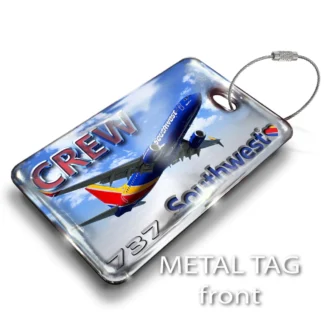
Our favorite bag tags are made by koolkrew. The metal luggage tags are by far the most impressive and best luggage tags we’ve ever seen! And we supply tags from many different airlines. These bag tags are so durable once you’ve attached them to your luggage you simply can forget they are there. They are so well made you can think of them as designer luggage tags. With the metal wire ring attachment they simply aren’t going anywhere no matter how hard you are with your luggage. Perfect for crew members on the go or frequent flyers who know how important it is to keep track of their bags.

Conclusion

In conclusion, luggage bag tags are small, identifying labels that attach to your suitcase, backpack, or other travel bag. They serve an important purpose by providing information that helps to ensure that your luggage arrives at its destination safely and on time. Luggage tags help you to identify your luggage, provide a way to contact you in case your luggage is misplaced, play an important role in security, and can be personalized to reflect your personality or style. Remember to consider durability and weather-resistance when choosing a luggage tag, and the type of information you want to include on it.