Posted on

Unlocking the Skies: The Tremendous Joys of Aircraft Ownership: 8 Reasons Why it’s a Huge Sense of Accomplishment

close up photography of fighter plane

The joys of aircraft ownership, Owning an aircraft can be one of the most rewarding experiences for anyone who loves aviation and the freedom that it provides. Whether you’re a seasoned pilot or a first-time aircraft owner, the joys of aircraft ownership are many and varied.

Freedom

One of the biggest advantages of owning an aircraft is the freedom and flexibility that it provides. With your own aircraft, you can fly to virtually any destination you choose, on your own schedule. Whether you’re traveling for business or pleasure, you’ll be able to get where you need to go quickly and efficiently, without the hassle and delays of commercial air travel. You won’t have to worry about waiting in long lines, dealing with TSA security checks, or dealing with flight delays and cancellations. You’ll have more control over your travel experience and the ability to make it as comfortable and enjoyable as possible.

Flexibility

One of the biggest benefits of owning your own aircraft is the flexibility it offers. You don’t have to worry about availability or scheduling conflicts, and you can plan your flights around your own schedule. This can be particularly beneficial for business travelers who need to conduct confidential meetings in-flight or for leisure travelers who want to explore new destinations on their own terms.

Accomplishment

Owning your own aircraft is a significant accomplishment that requires dedication, hard work, and a significant investment of time and money. It’s a goal that many aspiring pilots and aviation enthusiasts dream of achieving, but few actually do. Building or buying your own aircraft is a significant achievement, and flying it is a unique feeling that you can’t get from other forms of transportation. You’ll be able to show off your aircraft to friends and family, and share your love of aviation with others.

Perspective

In addition to the freedom and sense of accomplishment, owning an aircraft also allows you to experience the beauty of the world in a new way. From flying over majestic mountains to cruising above crystal-clear oceans, you’ll be able to see the world from a whole new perspective. You’ll also be able to take aerial photos and videos that will be treasured memories for years to come.

Community

The joy of aircraft ownership is the sense of community that it creates. Whether you’re part of a flying club or just have a group of friends who share your passion for aviation, owning an aircraft is a great way to connect with others who share your interests. You’ll be able to share tips and advice, and enjoy the camaraderie of other aircraft owners.

Personalization

One of the most exciting aspects of owning your own aircraft is the ability to customize it to fit your specific needs and preferences. This can include adding special equipment or making interior modifications. You can make your aircraft truly yours and stand out from the crowd.

Costs

Of course, owning an aircraft also comes with its own set of responsibilities and costs. Aircraft maintenance and insurance can be expensive, and it’s important to be aware of these costs before making a purchase. However, over time, owning your own aircraft can be more cost-effective than renting. You’ll save money on hourly rental fees and won’t have to pay for costly maintenance and repairs. Additionally, owning your own aircraft can offer significant tax benefits, including depreciation and deductions for business use. However, for many aircraft owners, the joys of aircraft ownership far outweigh the costs and responsibilities.

Investment

Lastly, owning your own aircraft is a great way to diversify your investment portfolio. It can appreciate in value over time and can be a wise financial decision.

Conclusion

In conclusion, owning an aircraft can be a truly rewarding experience for anyone who loves aviation. From the freedom and flexibility it provides to the sense of accomplishment and pride, the joys of aircraft ownership are many and varied. If you’re considering becoming an aircraft owner, be sure to weigh the costs and responsibilities carefully, but don’t let them deter you from pursuing your dream of aviation.

Posted on

Ever Wonder How Airplanes fly? Unleashing the Secrets of Flight: 5 Fascinating Facts on How Airplanes Defy Gravity

How airplanes fly

Wondering the reason of How airplanes fly? Aircraft are able to fly thanks to the principles of lift, weight, thrust, and drag.


Lift

Lift is the upward force that opposes the weight of the aircraft, which is the force of gravity pulling it downward. The lift is generated by the wings of the aircraft, which are designed to create a difference in air pressure above and below the wing. This difference in air pressure is known as Bernoulli’s principle, which states that as the speed of a fluid (in this case, air) increases, its pressure decreases. The wings of an aircraft are shaped to create a larger area of low pressure above the wing and a smaller area of high pressure below the wing, resulting in lift.

Weight

Weight is the force of gravity pulling an aircraft downward, and it is the opposing force to lift. In order for an aircraft to fly, it must generate enough lift to overcome its weight.

Weight is determined by the mass of an aircraft and the force of gravity acting upon it. The weight of an aircraft can be broken down into two categories: empty weight and gross weight. The empty weight is the weight of the aircraft when it is empty of all passengers, cargo, and fuel. The gross weight is the total weight of the aircraft, including all passengers, cargo, and fuel.

The weight of an aircraft plays a crucial role in its performance. A heavy aircraft will require more lift to overcome its weight, which means it will need more thrust and a greater angle of attack. This can affect the aircraft’s fuel efficiency, speed and range. On the other hand, a lightweight aircraft will require less lift to overcome its weight, which means it will need less thrust and a smaller angle of attack. This can result in improved fuel efficiency, speed and range.

The weight of an aircraft is also a key factor in determining its maximum takeoff weight and maximum landing weight. These limits are set by the aircraft manufacturer and must be adhered to by pilots to ensure the safety of the aircraft and its passengers

Thrust

Thrust is typically provided by the aircraft’s engines, which can be either propellers or jets. Propellers are a type of fan that generate thrust by pushing air backwards, while jet engines use a combustion process to generate thrust.

The amount of thrust an aircraft requires depends on several factors, including its weight, speed, and altitude. For example, during takeoff, an aircraft needs a large amount of thrust to overcome its weight and lift off the ground. As the aircraft climbs, the amount of thrust needed decreases as the aircraft’s weight decreases.

Pilots can control the amount of thrust generated by the engines by adjusting the engine’s power settings. They can also control the aircraft’s speed and altitude by adjusting the thrust. For example, to increase speed, the pilot can increase thrust, while to decrease speed, the pilot can decrease thrust again, how airplanes fly.

Drag

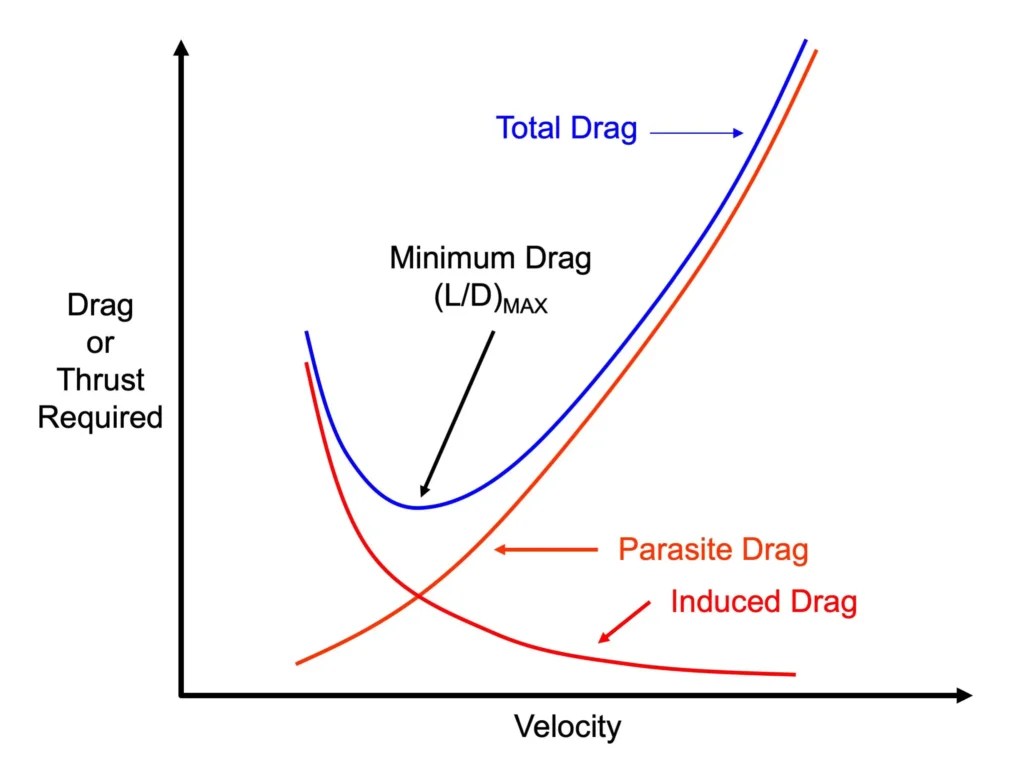
Drag is the resistance that opposes the forward motion of the aircraft. This is caused by the friction of the air molecules against the surface of the aircraft.

Drag is caused by the friction of the air molecules against the surface of the aircraft. As the aircraft moves through the air, the air molecules come into contact with the surface of the aircraft, which creates a resistance force. This resistance force is known as drag.

There are two main types of drag: parasitic drag and induced drag. Parasitic drag is caused by the friction of the air molecules against the surface of the aircraft. It is a result of the roughness, irregularity, and other imperfections of the surface of the aircraft. Induced drag is caused by the wing generating lift. As the wing generates lift, it also generates a vortex of turbulent air behind it, which creates a resistance force known as induced drag.

Pilots can reduce drag by using different techniques, such as streamlining the aircraft’s design, using smooth surfaces, and by increasing the speed of the aircraft.


How airplanes fly

To fly, an aircraft must generate enough lift to overcome its weight, and enough thrust to overcome drag. The pilot can control the aircraft’s altitude and speed by adjusting the thrust and the angle of attack of the wings. The angle of attack is the angle between the wing and the oncoming airflow. By increasing the angle of attack, the pilot can increase lift, allowing the aircraft to climb. By decreasing the angle of attack, the pilot can decrease lift, allowing the aircraft to descend.


Bernoulliโ€™s principle further explained

Bernoulli’s principle is a fundamental concept in fluid dynamics, which states that as the speed of a fluid increases, its pressure decreases. This principle is based on the fact that as a fluid (such as air or water) flows over a surface, its speed and pressure are affected in different ways.

When a fluid flows over a curved or angled surface, its speed increases. This increase in speed causes a decrease in pressure, as the molecules of the fluid are moving faster and colliding with the surface less frequently. This decrease in pressure is known as the low-pressure area.

On the other hand, when a fluid flows over a flat or straight surface, its speed decreases. This decrease in speed causes an increase in pressure, as the molecules of the fluid are moving slower and colliding with the surface more frequently. This increase in pressure is known as the high-pressure area.

Bernoulli’s principle is used to explain a wide range of phenomena, including the lift of an aircraft wing, the flow of water in a pipe, and the behavior of air in a wind tunnel. In aircraft, wing’s aerofoil shape is designed to create a greater speed of airflow over the upper surface, creating a lower pressure area above the wing, and a smaller speed of airflow under the wing, creating a higher pressure area beneath the wing. This difference in pressure generates the lift force that opposes the weight of the aircraft and keep it in the air.


Summary

In summary, How airplanes fly, the aircraft’s ability to fly is based on the four fundamental principles of lift, weight, thrust and drag. The pilot controls the aircraft’s altitude and speed by adjusting thrust, wing angle of attack and other flight control surfaces.

If you want the real reason, Unveiling the Truth: 10 Reasons Why Airplanes Really Fly Using Magic.

Posted on

Fueling the fire: “Aviation Runs in Their Blood” – The Most Important thing for Passionate Aviators – 4 key factors

jet cloud landing aircraft

For many aviation runs in their blood, from pilots, plane spotters, mechanics, gate agents, FBO workers, ramp workers and more.

Aviation is not just a job or a hobby for some, it runs in their blood. For these individuals, the world of flight is a passion that cannot be denied. From the roar of the engines to the feeling of soaring through the skies, aviation is a way of life.

Childhood

For those with aviation in their blood, the love of flight begins at a young age. For these passionate aviators, the thrill of soaring through the skies is something that has always been a part of them. From childhood, they have been captivated by the sight of airplanes in the sky and the freedom that comes with flying. For these individuals, aviation is more than just a hobby or a career, it’s a way of life. They are driven by the desire to explore the world from above, to experience the beauty of the earth from a unique perspective and to push the limits of human flight. The passion for aviation runs deep in their veins, and it is something that will stay with them for a lifetime.

Passion

For some, the passion for aviation leads to a career in the industry. These individuals have a deep understanding and love for the intricacies of flight, and the desire to make a career out of it. They may become pilots, air traffic controllers, engineers, mechanics or any other of the many professions that make up the aviation industry. They have dedicated their lives to the pursuit of flight, always striving to learn more and improve their skills. The aviation industry offers a wide range of opportunities, from flying commercial jets to working on cutting-edge research projects. For these individuals, a career in aviation is not just a job, it’s a calling. They are driven by the desire to make a difference in the world, to push the boundaries of what’s possible and to be a part of something bigger than themselves.

Hobby

For others, aviation is a hobby and a way to escape the day-to-day grind. They spend their free time flying model airplanes, building replicas of their favorite aircraft, or even flying real planes as a hobby pilot. They attend airshows, plane spotting events, and other aviation-related gatherings, always eager to be around the aircraft and the people who love them.

For those with aviation in their blood, the love of flight extends beyond the practical aspects of flying. The history and technology of aviation also hold a deep interest. They study the early pioneers of flight, the development of the first airplanes, and the advancements in technology that have led to modern air travel. They are fascinated by the engineering and design of aircraft, and the aerodynamics that make flight possible.

Way of life

For some, aviation is not only a passion but also a way of life truly aviation runs in their blood. They have aviation-themed decor in their homes, wear aviation-themed clothing, and even name their children after famous airplanes or pilots. They are always looking for ways to incorporate their love of flight into every aspect of their lives.

Aviation is more than just a job or a hobby for those with it in their blood. It is a passion that cannot be denied. The love of flight is something that runs deep, and it is a part of who they are. For these individuals, the world of aviation is not something that can be turned off or put away, it is a way of life.

Conclusion: When aviation runs in their blood

In conclusion, having aviation runs in their blood and heart is a special thing. It is a passion that cannot be denied and it becomes a way of life. It is not just about flying, but it’s the love of the history, technology and the adrenaline rush that comes with flying. It’s something that those who have it in their blood will always cherish and continue to fuel their passion for aviation.

Posted on

Truly, I’d rather be flying – Wouldn’t you?

Flying Etiquette, I'd rather be flying

“I’d rather be flying” is a popular phrase that expresses the passion and joy of flying for many pilots, aviation enthusiasts, and anyone who has experienced the thrill of being in the air. In this blog post, we will explore the meaning of the phrase, the reasons why many people feel this way, and the different ways in which flying can be experienced.


Becoming a pilot

For pilots, the phrase “I’d rather be flying” expresses the love of flying and the freedom that it brings. Pilots spend countless hours training and studying to become proficient in the skills necessary to fly an aircraft. They also spend a significant amount of time preparing for flights, completing checklists, and monitoring weather conditions. But all of this effort is worth it when they’re in the air, soaring above the clouds and experiencing the unparalleled freedom of flight.


Aviation enthusiasts

For aviation enthusiasts, the phrase “I’d rather be flying” expresses the thrill and excitement of experiencing flight. Many aviation enthusiasts take flights as a hobby, whether it be flying in small single-engine aircraft or taking a ride in a commercial airliner. They also spend a lot of time at airports, watching planes take off and land, and talking with pilots and other aviation enthusiasts. The excitement of watching a plane take off or experiencing the sensation of flying is something that many aviation enthusiasts find hard to match.


The joy of flying

For those who have had the opportunity to fly, the phrase “I’d rather be flying” expresses the joy and wonder of being in the air. Whether you’re a seasoned pilot or a first-time passenger, the feeling of being in an aircraft and looking down at the world below is an experience that can’t be matched. From the beautiful views of the landscape to the sensation of weightlessness and the feeling of freedom, flying is an experience that can be truly life-changing.


Stressful world

For many people, the phrase “I’d rather be flying” represents a desire to escape the everyday stresses of life and experience something truly extraordinary. The world can be a stressful and overwhelming place, and the freedom and tranquility of flying can be a welcome escape. The sensation of flying can be a form of therapy, providing a sense of peace and tranquility that can be hard to find on the ground.

Dream

For some, the dream of flying is still just that, a dream. But for those who have the opportunity to experience flight, the phrase “I’d rather be flying” is a reminder of the joy and wonder that flying can bring. From solo flight lessons to sightseeing tours, there are many ways to experience the thrill of flight. Whether you’re a pilot, an aviation enthusiast, or someone who has always dreamed of flying, there is no denying the passion and joy that flying brings.

Conclusion

In conclusion, the phrase “I’d rather be flying” expresses the passion and joy that many pilots and aviation enthusiasts feel about flying. It represents the freedom, thrill, and wonder of being in the air. Whether you’re a seasoned pilot or a first-time passenger, flying is an experience that can be truly life-changing and it’s definitely worth the effort and time to experience the beauty and freedom of flying. Flying is not just a mode of transportation but an adventure and a passion for many, and the phrase “I’d rather be flying” encapsulates that spirit of adventure and passion.